The problem
Where manual work costs you
- Front-desk staff answer the same hours, price and insurance questions all day
- No-shows and unconfirmed appointments leave chairs empty
- Patient requests arriving after close wait until morning
- Medical details in chat need consent-first handling under PDPL
The workflow
What automation replaces
- 01
Inbound WhatsApp enquiry is classified into hours, price, insurance or booking intent
- 02
Appointment slots are offered and confirmed; the receptionist calendar stays the source of truth
- 03
Reminders fire before the visit; a missed visit triggers a rebooking message
- 04
Insurance and treatment-detail questions escalate to a named staff member with the full thread
- 05
Every conversation is logged; personal data follows the PDPL consent and retention rules the clinic documents
Build cost
15,000–40,000 AED/project
plus Meta per-message pricing, BSP fees and run costs
Where a Dubai clinic loses money
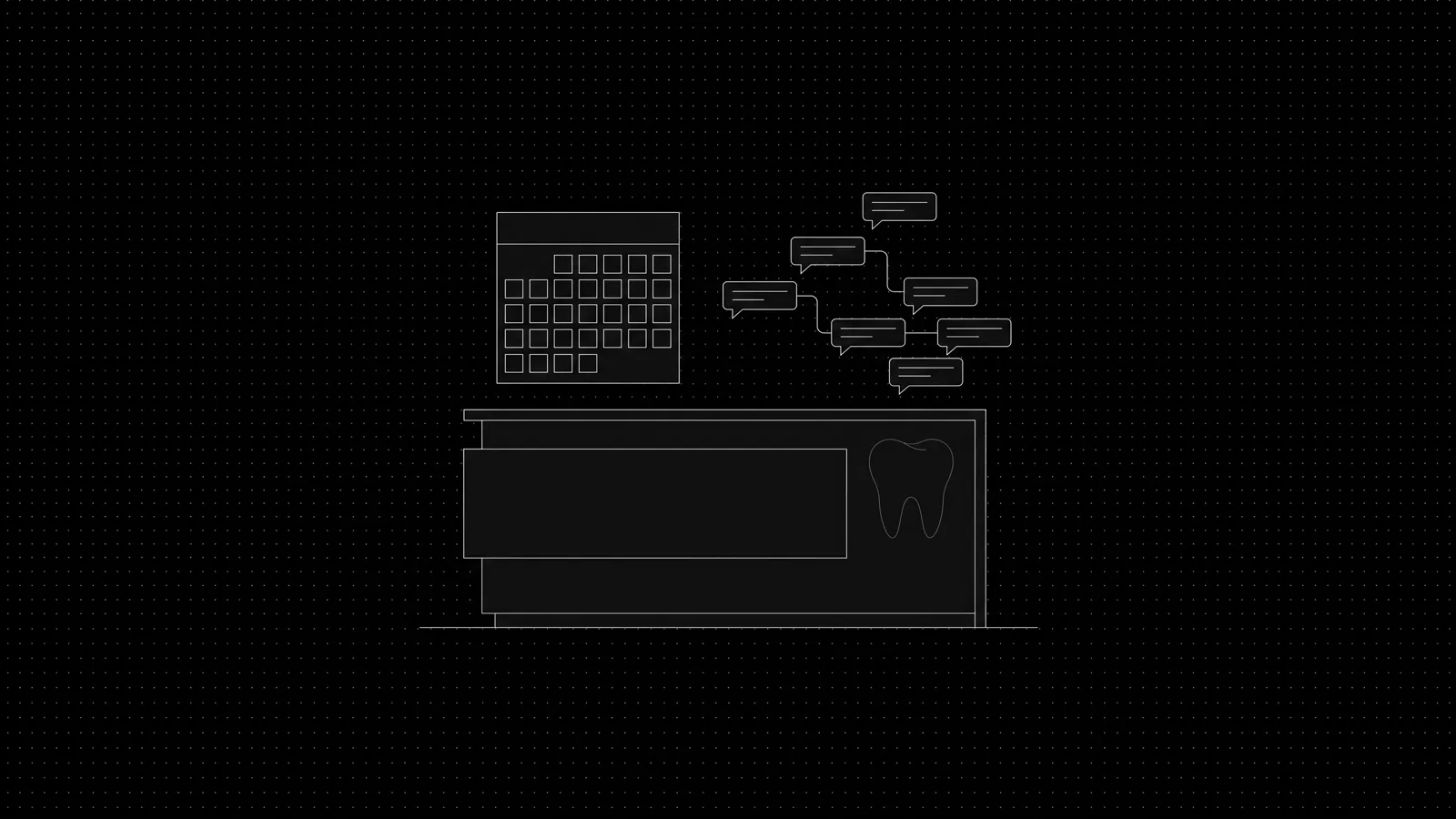
A dental clinic in Dubai loses revenue in three places that have nothing to do with the quality of the dentistry. The front desk answers the same hours, price and insurance questions all day, and every answer is a conversation that could have ended in a confirmed booking. Patients who never confirm their appointment leave a chair empty that a walk-in could have filled. An enquiry that arrives at 8 pm sits in the queue until morning, by which point the patient has usually messaged the clinic across the street.
The first line of your reception can now run on the official WhatsApp Business Platform, the channel your patients already use, and it works the hours the front desk doesn't.
We have built the two mechanics this workflow depends on before. The UAE Visa Platform takes an unstructured first contact, a passport scan, and turns it into a structured record with status tracking. Processing went from several days down to between a few hours and two days. The CBT coach bot runs conversational triage that keeps people moving through a process instead of dropping them. A dental intake build is those two mechanics pointed at a reception desk: structured capture from an unstructured first message, then a conversation that ends in a confirmed slot. Neither was built inside a clinic, so read them as evidence we can build the mechanics, not as clinic case studies.
The WhatsApp booking workflow, step by step
The system starts the moment a patient messages your number, whether from a click-to-WA ad, a QR code on the door, or a saved contact. The first message is classified into one of four intents: hours, price, insurance, booking.
A booking intent goes straight to the schedule. The bot proposes two or three real slots from your receptionist calendar, the patient picks one, and the booking is written into that same calendar. The calendar stays the source of truth: the receptionist sees the appointment appear in the normal system, and can override any of it by hand. The bot reads and writes the same calendar the receptionist uses.
Twenty-four hours before the visit a reminder template goes out with the time, the location, and a one-tap confirm or reschedule. The numbers that keep the chair full live in this step.
We record the empty-slot rate for a full month before we build anything.
We put one number in every booking scope we sign: the empty-slot rate for the month before we build. When the reminders go out, that number is the verdict. It is the only thing a clinic should hold us to.
Watch out
Questions that mention symptoms, treatment details, or anything a clinician should judge are classified as clinical and routed to a named staff member with the full thread attached. The receptionist sees the whole conversation, not a paraphrased summary. The bot keeps logistics; the clinic keeps medicine. That split is the only way this works in a DHA-licensed clinic, and it is the boundary we draw in every build.
Is patient data on WhatsApp PDPL compliant?
The short answer is yes, with the caveat that compliance is about the data flow, not about WhatsApp. Health data is sensitive data under Federal Decree-Law No. 45 of 2021. That means collection needs a lawful basis, consent has to be informed and recorded, and retention and deletion have to be documented. Messages that include treatment type, preferred slots and insurance details are health data, regardless of which app carries them.
WhatsApp itself has a rule that works in your favour. The Business Platform requires opt-in before you message anyone (Meta's opt-in policy). You collect that opt-in once, record when it was given, and the same consent record doubles as evidence under PDPL. The PDPL-compliant AI CRM guide goes through the hop-by-hop data-flow map an audit expects: where each message lands, which subprocessors see it, and the deletion path. The intake schema below includes the consent fields because that consent is where PDPL gets satisfied or not.
Two practical points. The Meta Business account and the BSP contract should sit with the clinic, not with the agency, so the patient list and consent records stay yours if you change vendors. And if you keep records in the UAE, storage and processing locations should be in the schedule of data flows you document. Patients who opt in to appointment communication should not quietly turn into marketing recipients; the schema keeps those two consents separate for a reason.
What does a dental clinic pay?
A focused build runs 15,000 to 40,000 AED and ships in 3 to 6 weeks. That buys one workflow done properly: classification, slot proposal, calendar write-back, reminder and no-show rebooking templates, clinical routing, and human handoff with full thread. Reading it from the AI automation cost guide, the low end assumes one language and one calendar system with a clean API. The price climbs with Arabic and English handling, voice-note transcription, or a booking system that has no API and needs one built.
The channel has its own bill, separate from the build. Meta charges per delivered template message outside the 24-hour customer service window, with rates set by template category and the recipient's country code (Meta pricing docs). A Business Solution Provider usually adds a monthly platform fee or a per-message markup. Run costs for the system land between 500 and 5,000 AED a month depending on volume, model choice and hosting, with a maintenance retainer of roughly 10 to 20 percent of the build per year. We break the channel numbers out separately in WhatsApp Business API in the UAE, because they belong to the channel and stay the same whoever builds the bot.
| Line item | Typical range |
|---|---|
| Build (one intake + booking workflow) | 15,000 to 40,000 AED, one-off |
| Meta template messages + BSP fee | volume-based, monthly |
| Run cost (model, hosting, monitoring) | 500 to 5,000 AED / month |
| Maintenance retainer | 10 to 20% of build per year |
The intake schema and a readiness checklist
The practical output of the first build is a structured record for every enquiry. This is the field schema we would write into a dental WhatsApp intake, concrete enough to screenshot into a proposal:
{
  "patient": {
    "full_name": "string",
    "phone": "string",
    "language": "en | ar",
    "is_existing": "true | false"
  },
  "enquiry": {
    "treatment_type": "checkup | hygiene | whitening | orthodontics | implant | other",
    "pain_level": "none | mild | severe",
    "is_emergency": "true | false",
    "preferred_day": "Mon | Tue | Wed | Thu | Fri | Sat",
    "preferred_slot": "morning | afternoon | evening"
  },
  "insurance": {
    "provider": "string",
    "has_policy": "true | false",
    "needs_verification": "true | false"
  },
  "consent": {
    "appointment_communication": "true | false",
    "marketing": "true | false",
    "recorded_at": "ISO 8601 timestamp"
  },
  "booking": {
    "proposed_slot": "ISO 8601",
    "status": "proposed | confirmed | rebooked | no_show | cancelled",
    "confirm_by": "ISO 8601"
  }
}
Three fields carry most of the weight. pain_level: severe routes to staff immediately, not to a booking prompt. insurance.needs_verification flags a case for a receptionist before the visit, so the patient does not discover a coverage gap in the chair. And the two consent flags stay separate, so appointment messages and marketing never share a permission.
Before you spend anything, the checklist we run with every clinic:
- Measure the empty-slot and no-show rate for one full month. That baseline is the number the project is judged against.
- Make sure the clinic holds the WhatsApp number, the Meta Business account and the BSP contract.
- Draw the data-flow map before build: where each message lands, which subprocessors see it, the retention and deletion path.
- Put the consent step in the first message flow and record when consent was given.
- Route anything clinical to a named person by default. The bot books; the clinician treats.
- Budget the monthly run costs as a line item, not an afterthought.
- Keep the receptionist calendar as the source of truth; the bot reads and writes it, it never holds a separate schedule.
The reasons to do this now, rather than when the front desk gets busier, are the same reasons the first build is the cheap one: a defined workflow against a calendar, with a measurable number the project is judged by. The AI receptionist scope guide explains which conversations stay with a person and which should never reach one. More on how we scope these builds is on the WhatsApp automation for Dubai operations page.
The takeaway
A dental clinic loses the most money on the repeated work: the same questions at the front desk, unconfirmed appointments, and after-hours enquiries that wait for morning. A WhatsApp booking build on the official Business Platform handles intake, reminders and no-show rebooking, routes clinical questions to named staff, and records consent under Federal Decree-Law 45/2021. It costs 15,000 to 40,000 AED to build plus channel fees and 500 to 5,000 AED a month to run.
Book the free audit and bring the workflow that eats the most hours. We will map it, tell you which parts deserve automation, and give you a fixed number for the first build.
FAQ
Can an AI receptionist actually book dental appointments?
It collects treatment type, preferred slot and insurance status, proposes times and writes the booking; the clinic calendar stays authoritative and a receptionist can override anything.
Is patient data on WhatsApp PDPL compliant?
WhatsApp Business Platform conversations are a documented data flow; compliance depends on what is collected, where it is stored, retention and consent. Federal Decree-Law 45/2021 applies to health data as sensitive data.
Does the bot answer medical questions?
No. It handles logistics (booking, hours, prices, insurance intake) and routes anything clinical to staff with full context.
Will automation get our WhatsApp number banned?
The official Business Platform with opt-in and approved templates is the sanctioned path; unofficial bots on the personal app violate Meta policy and do get banned.
What does an AI receptionist cost a clinic?
15,000–40,000 AED for the build plus Meta per-message pricing, a BSP fee and roughly 500–5,000 AED a month to run, depending on volume.
Sources
- Federal Decree-Law No. 45 of 2021uaelegislation.gov.ae
- Meta's opt-in policydevelopers.facebook.com
- Meta pricing docsdevelopers.facebook.com
Proof
Systems we shipped
Related reading
AI receptionist for a Dubai business: scope before you buy
What an AI receptionist should and shouldn't do for a UAE service business: intake, scheduling and FAQ vs. the conversations that still need a person
WhatsApp Business API in the UAE: costs and setup
WhatsApp Business Platform (Cloud API) in the UAE: real per-message pricing, BSP markups, verification and template rules, and what setup actually involves
PDPL-compliant AI CRM in the UAE: data flows that pass audit
How to build an AI CRM that survives a PDPL audit: data-flow maps, subprocessors, retention, consent, and Federal Decree-Law 45/2021 requirements
Start with a free audit
A 30-minute call: we map one workflow and show where automation pays back first