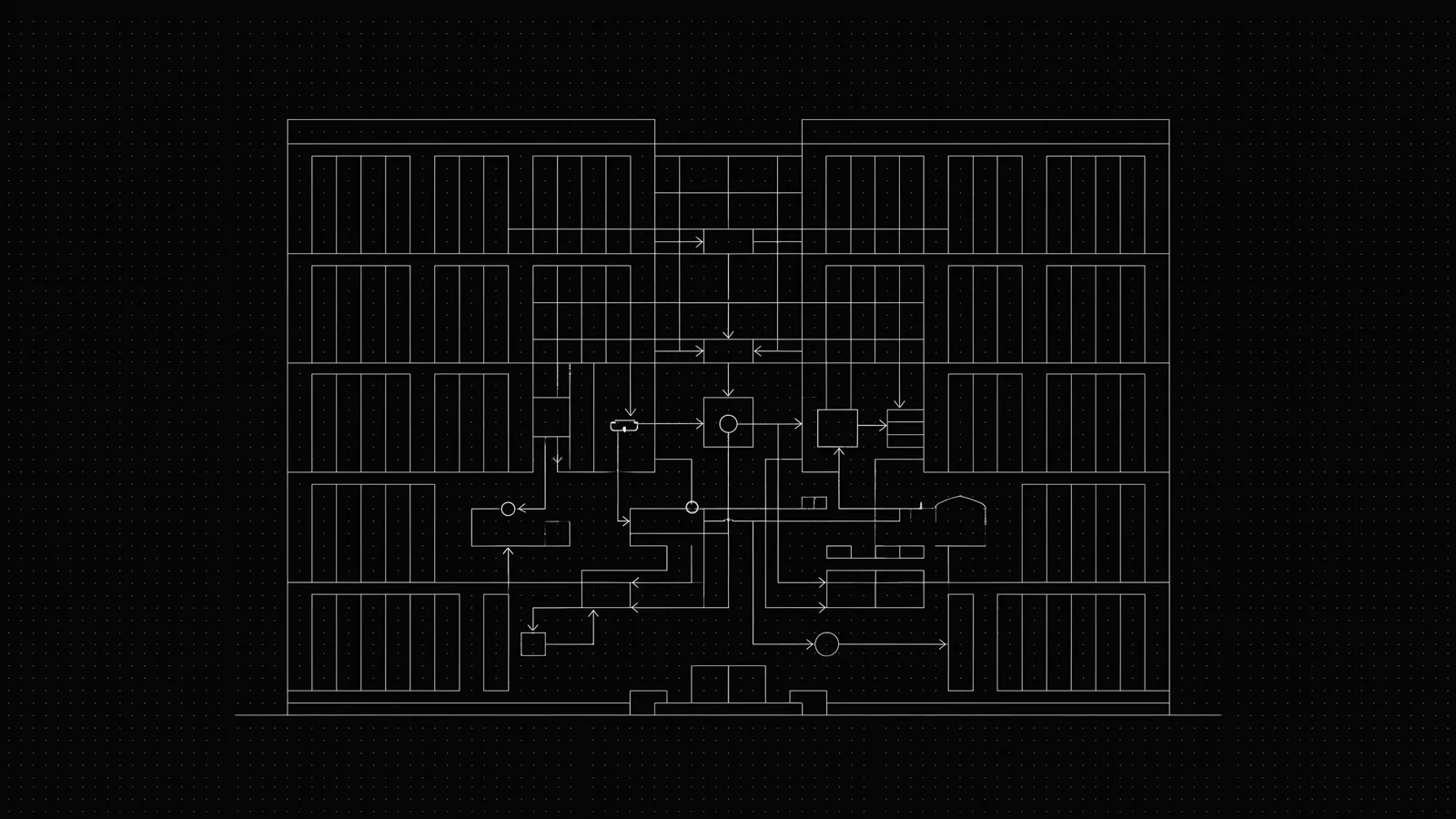
The problem
Where manual work costs you
- Portal leads decay in minutes and agents respond in hours
- Agents re-type fields from Ejari and SPA documents into the CRM
- Off-plan matching across developer feeds is manual
- The CRM is always three days behind reality
The workflow
What automation replaces
- 01
A Property Finder or Bayut enquiry is captured and qualified on WhatsApp in seconds: budget, area, timeline
- 02
Scored leads route to the right agent with the full thread
- 03
Ejari, SPA, NOC and title-deed documents are read and fields land in the CRM
- 04
Low-confidence extractions and client-facing actions wait for human approval
- 05
Arabic and English leads get equal handling, including voice-note transcription
Build cost
15,000–120,000 AED/project
plus Meta per-message pricing, BSP fees and run costs
Where Dubai brokerages lose the hours
A Property Finder or Bayut enquiry is a timed test. The buyer opened three or four listings, messaged the agencies and wants a useful answer quickly. Wait forty minutes and the conversation is already with a competitor. Portal leads decay in minutes; most agencies respond in hours. That gap is the first place a brokerage loses money.
The second place is documents. Agents re-type fields from Ejari certificates, sales and purchase agreements and no-objection certificates into the CRM by hand. That is slow, it introduces typos, and it is invisible to the sales director because nobody logs the copying. Our document pipeline write-up breaks down the field maps; the outcome is that a stamped Ejari or a scanned SPA arrives, gets read, and its named fields land in the CRM before an agent has finished opening the attachment.
We built the two pieces in separate shipped systems. An Inventory CRM runs roughly 8,000 units that previously lived in Excel and developer PDFs, with an AI assistant that proposes status changes and a person who approves them. A real estate agency website pre-qualifies buyers in its chat and generates PDF contracts, and cut lead-to-call time by 17%. A brokerage pipeline is those same mechanics pointed at property documents and portal chat. The ai-real-estate-systems hub walks the full capability map.
On our Inventory CRM build, status accuracy went from about 60% to about 98%, and finding a free unit dropped from roughly two hours a day to about ten seconds.
What the WhatsApp qualification pipeline does
The flow has five steps. The bot qualifies; it does not sell. It collects the facts, checks them against inventory and books the logistics. Negotiation and price objections go to a person with the full thread.
A portal enquiry arrives as text or a voice note. The pipeline classifies intent and opens qualification in seconds, asking the questions a strong agent asks first: budget, area, buy or rent, timeline. We keep the question count low, because a buyer who meets five screens of forms messages the next agency.
Scoring comes next. Rules beat model intuition. Instead of "this lead is hot" with no justification, the score is computed from the fields: the budget fits the inventory, the area matches what the office covers, the timeline is within 60 days, financing is in place. The scoring article documents the exact rule map and the fields that predict an actual viewing.
Routing sends the scored lead to the right agent with the transcript and the extracted profile, or to the team inbox with a priority flag. Escalation rules override the score: a buyer asking about units outside their stated budget, a viewing needed the next day, a complaint in the thread. Those go to a person immediately.
Write-back closes the loop. The contact, the fields and the conversation attach to the record in HubSpot, Salesforce, Zoho, Odoo or a custom system, anything with an API. The brokerages we audit typically discover their CRM is three days behind reality during the first week, and it stops being that once the sync runs. In the inventory build, deals lost to stale data dropped from roughly three a month to almost none.
A note on the channel: Meta charges per template message outside the reply window and makes replies inside the 24-hour window free (Meta pricing docs). The qualification conversation runs inside that window, which keeps the channel bill down; the running-cost picture is 500 to 5,000 AED a month.
Watch out
What does a pipeline cost a brokerage?
Builds price as a fixed fee for a defined first workflow, with a retainer for the run phase. Our cost article gives the full line items; the summary:
| Tier | Build cost (AED) | Timeline |
|---|---|---|
| Portal intake and qualification | 15,000 to 40,000 | 3 to 6 weeks |
| Document pipeline, one document family | 40,000 to 120,000 | 6 to 10 weeks |
| Operational system on your own data model | 120,000 and up | 10 to 16 weeks |
A brokerage sits at the low end of the document range for one clean document type with basic validation. The price reaches the top end when the build adds Arabic and English, two or three document types, a CRM without a clean API, or an approval step with more than one reviewer role. Arabic NOCs and handwritten amendments on an SPA are where the real hours go.
Run costs land between 500 and 5,000 AED a month: model API, Meta messages, hosting, OCR. Maintenance is the line people forget. Meta changes template rules, portals change lead formats, a CRM vendor ships a new API version, and someone has to notice. Budget a retainer of 10 to 20% of the build per year, or the system decays and the first sign arrives as a complaint.
The arithmetic that decides whether to build: two staff copying document fields by hand for two hours a day is roughly 85 hours a month across the team. Price those hours at your payroll rate, subtract the monthly run cost, and divide the build fee by what is left. That gives a payback period in months, and it is a better basis for the decision than any vendor's opinion.
The qualification schema we use
This is the field set we put in front of every buyer and tenant lead, whichever source it came from. Each field maps to a rule, not just a label.
| Field | Rule | Example |
|---|---|---|
| Budget | First filter against the inventory; say when nothing matches | 2.4 million AED |
| Area | District list, multi-select, not free text | Emirates Hills, Downtown |
| Buy or rent | Chooses the pipeline and the document set | Buy |
| Timeline | "Within 60 days" triggers viewings now | 30 days |
| Financing status | Cash vs pre-approved mortgage changes the pitch | Mortgage at 60% LTV |
| Viewing availability | Two concrete slots, booked in the conversation | Saturday 11:00, Sunday 10:00 |
A lead that answers all six becomes a viewing in one conversation. A lead that stalls at financing goes back to that question instead of receiving a price list. The schema is deliberately short; we add fields only when a rule uses them.
Reading Ejari, SPA and NOC into the CRM
The document half of the build starts where intake ends. A PDF, a photo of a stamped certificate, an email attachment, a WhatsApp forward. OCR turns it into text, extraction pulls the named fields, validation cross-checks them, and a person reviews anything the model flags as low confidence before it files.
| Document | Extracted fields | What it is |
|---|---|---|
| Ejari | Tenant, landlord, tenancy dates, annual rent | The registered tenancy contract at the Dubai Land Department |
| SPA | Parties, price, payment plan | The sales and purchase agreement between buyer and seller |
| NOC | Issuer, status, conditions | No Objection Certificate from the developer |
| Title deed | Owner, plot, area, deed number | The ownership record registered at the DLD |
Validation separates a useful pipeline from a dangerous one. The tenant name on the Ejari should match the lead. The price on the SPA should match the developer's registered rate where one exists. NOC conditions should not disappear into a PDF. Every failed check goes to the review queue, and every filed record carries the source page so an agent can trace it. That traceability is why agents will hand this pipeline their deals.
Where do RERA and compliance sit in the flow?
Brokering in Dubai runs through RERA registration under the Dubai Land Department. Agents hold a Trakheesi record through the same system, and advertised listings carry the agent's registration details. Compliance is a data problem as much as a licensing problem, and it shapes two parts of the build.
The intake schema captures the portal listing ID next to the lead. That links the enquiry to the exact listing the buyer saw, which keeps the advertising trail accurate when a RERA request or an audit arrives. The document pipeline keeps the contracts that support an agent's position on a given deal. We do not automate filings or submissions; those stay manual. The automation covers the record, the trace and the fields around them.
Buyer and tenant data is personal data under the UAE Personal Data Protection Law (Federal Decree-Law 45 of 2021). We document the data flow, name the subprocessors, keep retention limits and delete on request, which is the same discipline a PDPL audit expects. The qualification bot asks for consent to follow up before it schedules anything.
Does the pipeline handle Arabic and voice notes?
It has to, in Dubai. A large share of buyers message in Arabic, and a meaningful number send voice notes instead of text. The chat runs on Arabic-capable models, transcription handles voice notes with a confidence threshold, and anything below that threshold goes to a person before it becomes a CRM field. Arabic and English leads get the same score format and the same routing rules. Dialect matters; Khaleeji phrasing differs from Modern Standard Arabic, and the models are tuned on Gulf usage with a human fallback for the rest.
The takeaway
Two corridors, both priced: 15,000 to 40,000 AED for portal intake and qualification on WhatsApp, 40,000 to 120,000 for the document pipeline, and 500 to 5,000 AED a month to run either. The build is worth it only when the arithmetic of hours saved beats the run cost, and the review queue stays human.
Start with the corridor that costs you the most actual hours, measure it for two weeks, then extend. Book the free audit and bring the workflow that eats the most time, whether that is responding to portal leads or re-typing Ejari fields into the CRM.
FAQ
Can the bot qualify Property Finder and Bayut leads?
Yes, the enquiry is parsed, budget/area/timeline questions run on WhatsApp, and the scored lead reaches an agent with the whole thread.
Does it handle Arabic leads?
Yes, Arabic-capable models plus voice-note transcription with confidence thresholds and human fallback.
Can it read Ejari and SPA documents?
OCR plus extraction pulls parties, dates, financials and clause flags; a human reviews flagged fields before filing.
Does it write back to our CRM?
HubSpot, Salesforce, Zoho, Odoo: anything with an API; mapped fields are part of the pipeline spec.
What does it cost a brokerage?
15,000 AED and up for portal intake; multi-document pipelines with CRM write-back run 40,000–120,000 AED.
Sources
- Meta pricing docsdevelopers.facebook.com
- Dubai Land Departmentdubailand.gov.ae
- Federal Decree-Law 45 of 2021uaelegislation.gov.ae
Proof
Systems we shipped
Related reading
Ejari, SPA and NOC documents with AI: Dubai pipelines
A document pipeline for Dubai brokerages: reading Ejari, SPA, NOC and title deeds, extracting fields, and flagging risks before they reach an agent
WhatsApp bots for Property Finder and Bayut leads
The intake flow that works for Dubai portals: capture Property Finder and Bayut leads on WhatsApp, qualify in seconds, and route to the right agent
Dubai real estate lead qualification: automate the scoring, not the selling
How portal leads actually get qualified — the field map, the rules that beat model guesses, and where the handoff to a human belongs in a Dubai brokerage
Start with a free audit
A 30-minute call: we map one workflow and show where automation pays back first