The problem
Where manual work costs you
- Fee earners lose billable hours re-typing matter details and chasing intake documents
- Conflict-check and KYC data arrives unstructured over email and WhatsApp
- Court, renewal and filing deadlines live in inboxes and calendars
- English and Arabic matter documents both need reading
The workflow
What automation replaces
- 01
Inbound enquiry triggers a structured intake covering parties, matter type, urgency and conflict-check fields
- 02
Client documents are read by OCR plus extraction models; fields land in the matter record
- 03
Deadlines and filing reminders are tracked and escalated
- 04
Retainer and fee-agreement steps move forward only after a lawyer approves
- 05
Everything is logged for audit; client confidentiality drives where data lives under PDPL
Build cost
40,000–120,000 AED/project
plus Meta per-message pricing, BSP fees and run costs
Most of the hours a fee earner loses each week sit before the actual legal work starts. Matter details get re-typed from a first email. Conflict-check data arrives as a screenshot on WhatsApp. The counterparty's Emirates ID shows up a day later as a photo. None of that corridor is legal work, yet it consumes people whose time is billed as legal work.
The intake corridor is the automation target, not the drafting. Structured client onboarding, conflict-check data collection, document reading and deadline reminders form the system. We have built this intake pattern in an adjacent regulated domain: a UAE visa platform that turns passport scans into structured applications using the same OCR-plus-extraction-and-human-approval stack we would run for a matter file. For a law firm the boundaries and the confidentiality stakes are different, which is why every client-facing step waits for a named lawyer before anything goes outside the firm. The full service is on our AI automation for Dubai operations page.
Where do fee earners lose the most hours?
The four friction points are consistent across the firms we scope:
A junior associate re-types the client's name, contact details and matter summary from an enquiry email into the practice-management system. Re-typing adds no value. The data already exists; it needs to land in the right fields.
Conflict-check and KYC arrive unstructured. A screenshot of an Emirates ID, a WhatsApp message with a company registration number, a PDF of a trade license. Each one requires a person to read and re-enter it. The conflict-check search runs on manually gathered names instead of structured data the system already holds.
Court dates, license renewals and filing deadlines live inside a partner's calendar and a paralegal's inbox. One missed deadline means a missed renewal or a missed court appearance. The cost of that failure is client liability.
English and Arabic matter documents both need reading. A bilingual contract, a DIFC court filing, an Arabic-language NOC. These arrive as scans and photos and must be read correctly in both languages before they reach the matter file.
What does a structured intake corridor look like?
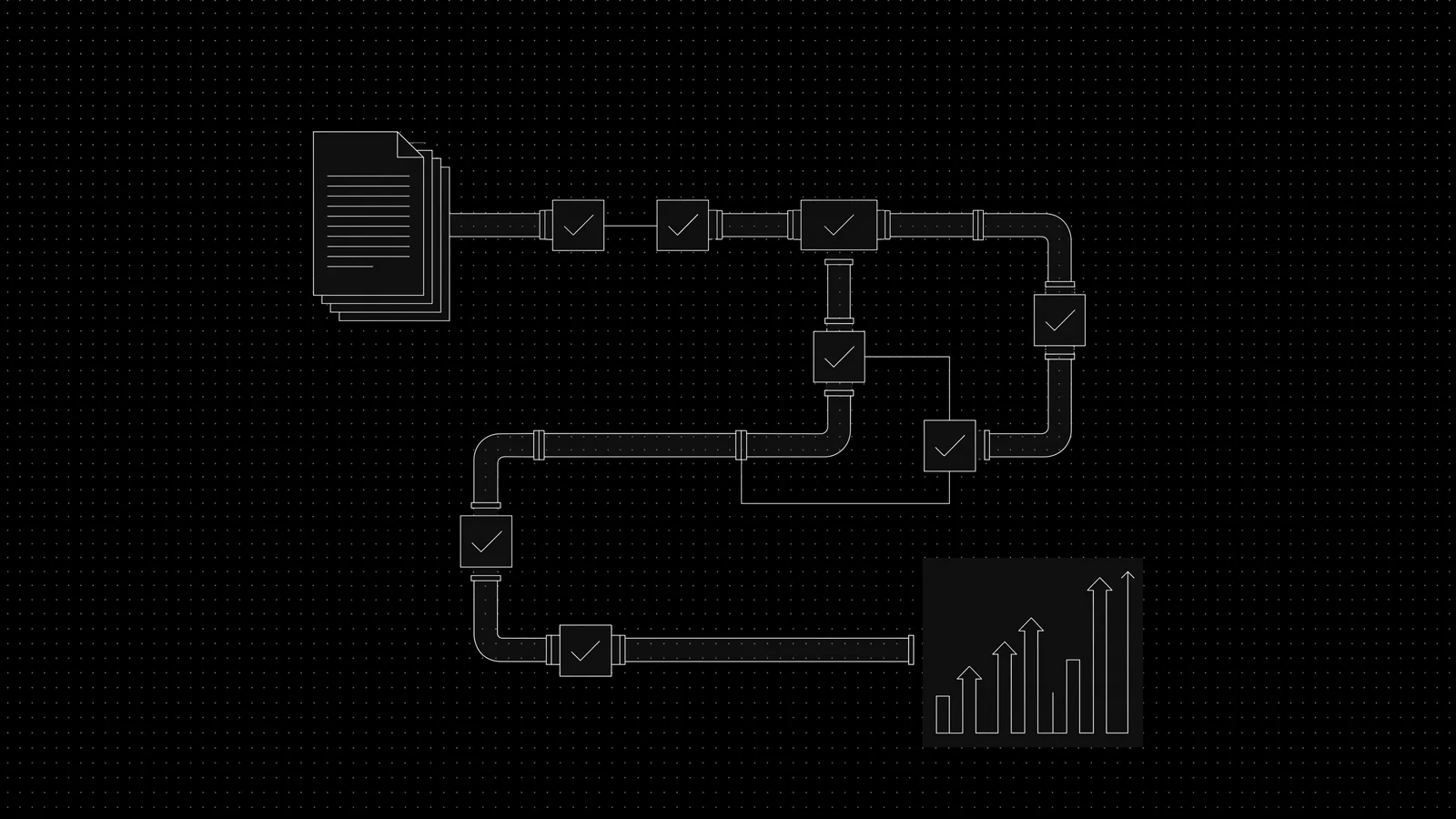
The workflow has five steps, and the design principle is consistent: the AI drafts and flags, a lawyer approves before anything reaches the outside world.
Inbound enquiry triggers a structured intake form. The client answers questions about matter type, parties involved, whether an opposing party exists, which jurisdiction applies and how urgent the matter is. The form is a data structure, not a free-text email. Fields that are missing stay null. We do not fill gaps by guessing; a null field becomes an explicit question to the client rather than an assumption in the record.
Client documents are read by OCR and extraction models. Passport scans, Emirates ID copies, trade licenses, MoA documents and contracts arrive by email or WhatsApp. The system reads each file, extracts the named fields and writes them to the matter record with a confidence score and a reference to the page the value came from. Arabic-language pages route to an Arabic-capable OCR path. When a confidence score falls below the threshold for a required field, the record is flagged for a reviewer before it becomes a matter fact. We covered the mechanics of this reading step for a related document mix in Ejari, SPA and NOC document pipelines.
Deadlines and filing reminders are tracked and escalated. Court dates, MoA renewal windows, license expiry dates and filing deadlines enter as explicit date fields. The system calculates reminders relative to each deadline and fires them to the responsible person at the right interval. A court filing with a notice period gets a reminder partway out and again close to the deadline. The system tracks the dates; the lawyer tracks the strategy.
Retainer and fee-agreement steps move forward only after a lawyer approves. The system can draft the retainer letter or the fee schedule from the matter record; the approval is a named lawyer clicking to confirm, and the action log records who approved and when.
Everything is logged for audit and for confidentiality. The log is the record of what was done, when, and by whom. Client confidentiality drives where the data lives and who can see it. The PDPL data-flow map, which names every subprocessor, every storage region and every deletion path, applies to this system the same way it applies to any other system that holds personal data. The engineering discipline is the same; the obligation is professional and statutory.
What does intake and document automation cost a law firm?
A lean intake build that handles structured onboarding, conflict-check data collection and deadline reminders without deep document reading runs in the range of 15,000 AED. That is the same entry point as a focused WhatsApp build; the logic is comparable, and the intake form is the core of both.
A document pipeline that reads contracts, court filings, Arabic-language documents and MoA files, extracts the relevant fields and writes them to the matter record runs 40,000 to 120,000 AED. The range reflects the number of document types, whether Arabic-language handling is needed, and whether the pipeline writes back to a practice-management system or a custom matter tracker.
Running costs sit between 500 and 5,000 AED a month depending on document volume and the number of matter records the system manages. A maintenance retainer for new document templates, rule updates and model changes typically runs 10 to 20 percent of the build cost per year. These figures come from our published AI automation budget guide, the same source we use with every client before a scope conversation.
We have shipped this intake-and-reading pattern before. On a UAE visa processing platform, passport scans move through OCR and extraction into a structured application with live status, and a human approves the filed record. The document pipeline here is the same class of work with a different confidentiality envelope.
The conflict-check schema we collect at intake
This is the field map we agree with a law firm before writing any code. The shape decides what the system collects, what it flags for a reviewer and what it escalates. A field that is not in the schema does not get collected.
{
  "matter_type": "litigation | contract_review | corporate | family | property | immigration | other",
  "language": "en | ar | mixed",
  "parties": [
    {
      "name": "",
      "role": "client | counterparty | joint_client",
      "entity_type": "individual | company | govt_entity",
      "free_zone_registration": "DIFC | ADGM | none"
    }
  ],
  "opposing_parties": [
    {
      "name": "",
      "affiliation": "known_relative | former_client | none",
      "prior_matter": ""
    }
  ],
  "jurisdiction": "onshore | DIFC | ADGM | federal | other",
  "urgency": {
    "level": "low | standard | rush",
    "court_deadline": null,
    "renewal_due": null
  },
  "documents_attached": ["sha256:..."],
  "conflict_status": "pending | cleared | review_required"
}
Null values mean the field was not found or not provided. We never let the model substitute a value. A missing counterparty name is an open conflict-check question; a guessed name is a false clearance.
Which steps run on their own and which wait for a lawyer
| Workflow step | Auto | Lawyer approves |
|---|---|---|
| Intake form collection and classification | yes | no |
| Conflict-check data extraction from documents and chat | yes | clearance issued only after review |
| KYC and document reading (English and Arabic) into the matter file | yes | low-confidence files flagged before filing |
| Deadline and renewal reminder calculation | yes | no |
| Draft retainer letter or fee agreement | drafts | sends only after a click |
| Any external filing or client-facing communication | no | yes |
Does the system draft client-facing replies on its own?
The system can draft, but it does not send. A retainer letter, a matter update to a client or a response to a third-party inquiry can be generated from the matter record. The lawyer reviews the draft, makes any changes needed and clicks to send. This is not a limitation of the technology. It is the design boundary that professional privilege and liability make non-negotiable. A client reply that was not reviewed by a named lawyer before it left the firm creates an accountability gap.
Every system we build keeps a named lawyer as the last person before anything goes outside the firm. The draft is automatic; the send is not.
The Meta WhatsApp Business Platform adds a separate channel obligation. The official BSP is the only sanctioned path for automated client messaging in the UAE. It comes with documented opt-in rules, approved template requirements and per-message pricing from Meta. Any client communication that runs through the BSP inherits those rules, which are straightforward to satisfy when the underlying workflow is lawyer-approved.
Where does client data live under PDPL?
Client names, Emirates ID numbers, matter facts and document copies are personal data under the UAE Personal Data Protection Law (Federal Decree-Law No. 45 of 2021). The law does not categorically require onshore storage, but it requires a documented basis for every transfer and every subprocessor that handles the data. For a law firm the practical implication is a data-flow map that names where each piece of client information is stored, which services see it during processing, how long it is kept and how it is deleted. The PDPL obligation also includes a path for a data subject to review and object to automated decisions, which reinforces the human-approval gate on client-facing steps.
The free-zone dimension matters at intake. A matter that involves a DIFC entity or an ADGM counterparty sits in a jurisdiction with its own procedural rules. The system collects jurisdiction as a data field; the lawyer decides which rules apply. This is why the intake form includes the free-zone registration field. The data tells the system what to route; the lawyer decides the legal outcome.
Documents that contain privileged material should not pass through general-purpose chat tools or email attachments once they enter the intake pipeline. The same discipline that governs physical file handling applies to digital intake: access is logged, retention is defined and the deletion path is documented. The PDPL-compliant AI CRM guide covers the engineering of that data-flow map in detail.
The takeaway
A law firm's intake corridor is a structured data-collection problem and a document-reading problem. The system handles both; a named lawyer handles every external action. The conflict-check schema, the document-reading pipeline and the approval gate remove the re-typing, the chasing and the deadline-surfacing from the fee earners' day without touching the part of the work that requires a law degree.
Book the free audit and bring the workflow that eats the most hours.
FAQ
Can AI read our matter documents in Arabic and English?
Yes, extraction models handle bilingual documents; low-confidence fields are flagged and routed to a reviewer before they reach the file.
Is client confidentiality preserved under PDPL?
Confidentiality is architectural: a documented data-flow map, named subprocessors, retention and deletion paths, the same discipline a PDPL audit expects under Federal Decree-Law 45/2021.
Does the system draft client-facing replies on its own?
It can draft, but nothing sends without a named lawyer's approval; low-confidence items escalate by default.
Does it integrate with Clio, HubSpot or our practice software?
Anything with an API is in scope; mapped fields and attachment sync are part of the pipeline spec.
What does intake plus document automation cost a law firm?
Document pipelines run 40,000–120,000 AED depending on document types; a lean intake build without deep document work starts lower, around 15,000 AED.
Sources
- Metadevelopers.facebook.com
- Federal Decree-Law No. 45 of 2021uaelegislation.gov.ae
Proof
Systems we shipped
Related reading
Ejari, SPA and NOC documents with AI: Dubai pipelines
A document pipeline for Dubai brokerages: reading Ejari, SPA, NOC and title deeds, extracting fields, and flagging risks before they reach an agent
PDPL-compliant AI CRM in the UAE: data flows that pass audit
How to build an AI CRM that survives a PDPL audit: data-flow maps, subprocessors, retention, consent, and Federal Decree-Law 45/2021 requirements
How much does AI automation cost in Dubai? Real budgets
Real AED budgets for AI automation in Dubai: what small builds, document pipelines and agent systems actually cost, plus the line items vendors hide
Start with a free audit
A 30-minute call: we map one workflow and show where automation pays back first