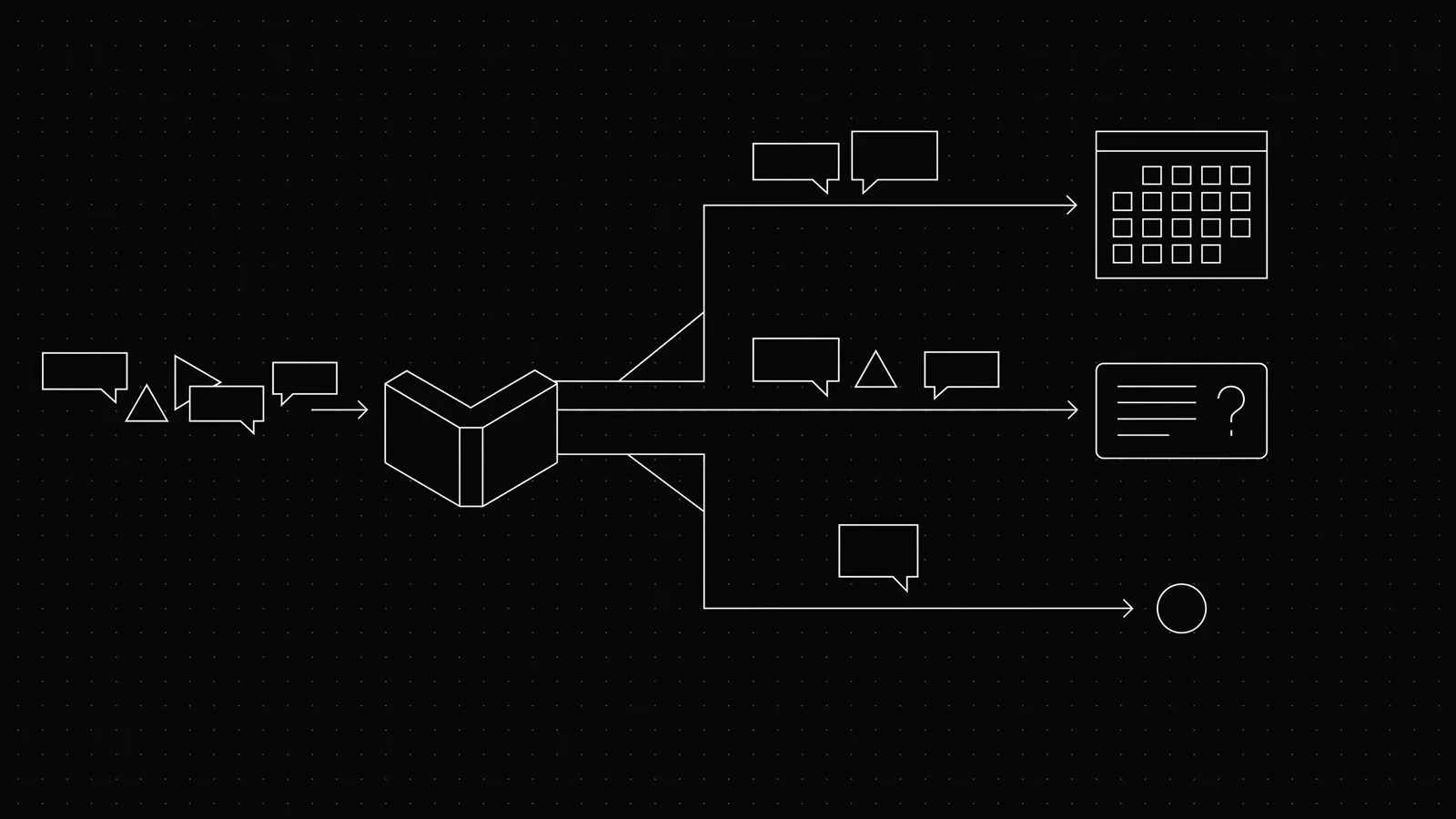
An AI receptionist in Dubai runs the intake loop. It takes the first message, asks what the customer needs, books into a real calendar, answers FAQs from documented answers and routes the conversation with context. It hands off judgment calls, complaints, negotiation, and anything medical, legal or visa-related. Most Dubai deployments are text-first on WhatsApp, and that changes the cost
Below is the scope we work through before anyone builds one of these. It separates what to automate, what to augment and what to keep human, and it explains the two cost paths: text-first and telephony voice
What can an AI receptionist actually handle?
An AI receptionist handles the four tasks that make up most first touchpoints: intake, scheduling, FAQ and routing. Intake means capturing who the caller is, what they need and how to reach them. Scheduling checks availability against real slots, writes into a real calendar and sends the confirmation. The same booking data drives reminders, which our guide to reducing no-shows at a Dubai clinic or salon covers in detail. FAQ answers come from a bank of reviewed answers you own, and the bot never improvises numbers or policies. Routing sends the conversation to the right person with the context attached
Everything in that list works on text channels today. On WhatsApp, a customer can type a request at 2 am and get a useful reply in seconds. The reply goes through the official Business Platform, which handles opt-in and templates (Meta: getting opt-in). How the bot passes a conversation to a person without losing context is in our WhatsApp bot handoff guide.
On our AI booking agents for clinics and services, the reply to a new request went from 15 minutes on average to 2–3 seconds, and night requests that nobody answered before are now taken and checked against the CRM and waitlist. When a case needs a person, the agents notify an admin, which is the part most demos leave out. A receptionist answers on the first ring; it doesn't finish every conversation
For clinics specifically, AI for dental clinics shows how this intake fits a practice
What should hand off to a person?
Anything that needs judgment, a license or a signature hands off. Complaints go to a person. So does price negotiation, and so does anything medical or legal. Visa and Emirates ID questions go to a person too, because a wrong answer costs more than a slow human. The same goes for a caller who asks twice to speak to someone
Our rule is simple. The receptionist books the call and leaves negotiation to people. It confirms what it knows and passes the thread on so the caller never repeats themselves. The agent opens with "I see you asked about the Marina Gate unit and the February viewing slot." That continuity is what makes the automation invisible, and we described the mechanism in human handoff on WhatsApp
A receptionist must also never invent answers. If the question falls outside its documented FAQ, it says so and routes. A model that guesses a price or a refund policy does more damage than a delayed reply, and the damage is worse in Arabic, where the caller can't tell how confident the answer is
Watch out
The failure mode people miss is the bot that stays in the conversation too long, on a question it was never given the answer to, and builds trust it then breaks
The scope checklist: automate, augment, keep human
We fill this in before pricing a receptionist build. It forces a decision on each task, and that's where most of the value and most of the disagreement sit. Print it, score every task, and you have the build scope and the main cost driver in one table
| Task | Automate | Augment | Keep human |
|---|---|---|---|
| First reply to a new WhatsApp/call | Yes, instantly | Reply with the caller's name and reason | |
| Capture name, need, contact | Yes | Confirm parsed fields back to the caller | |
| Booking a slot into the real calendar | Yes, against live availability | Propose 3 slots, write on choice | |
| Rescheduling and cancellations | Yes, with window rules | Outside the window, or duplicate bookings | |
| FAQ from documented answers | Yes | Anything not in the reviewed bank | |
| Route to the right department/agent | Yes, with context packet | Score by urgency | Named-human assignment if no owner |
| Complaints and escalations | Detect the tone, summarise | The person who can fix it | |
| Price, payment, quotes | Pass the lead | Negotiation and final numbers | |
| Medical, legal, visa, Emirates ID | Read the category, stop | A licensed or trained person | |
| Arabic voice note (Khaleeji, street noise) | Only with tested dialect data | Transcribe, then confirm in text | Anything below confidence threshold |
Augment means the AI gathers and structures, and a human decides. Keep human means the AI doesn't decide at all. The rows in keep human set the handoff design, and the handoff design is what drives the cost of the build
We priced a scope like this in our AI automation cost article. A WhatsApp-first intake-and-scheduling agent costs from 5,000 AED, and a focused build with CRM write-back in Arabic and English costs 15,000–40,000 AED. It stays at that level because a text flow needs no telephony engineering. The moment you add a voice layer, the price moves
Does an AI receptionist work in Arabic and English?
On text, yes, in both languages and often in one conversation. Dubai customers write the way they talk, mixing the two, "abi 2 bedroom fi JVC", and a bilingual model with a reviewed Arabic and English prompt set handles it without making the caller pick a language. We describe the same language handling in our Arabic-English voice agent article, and text is the part that's proven
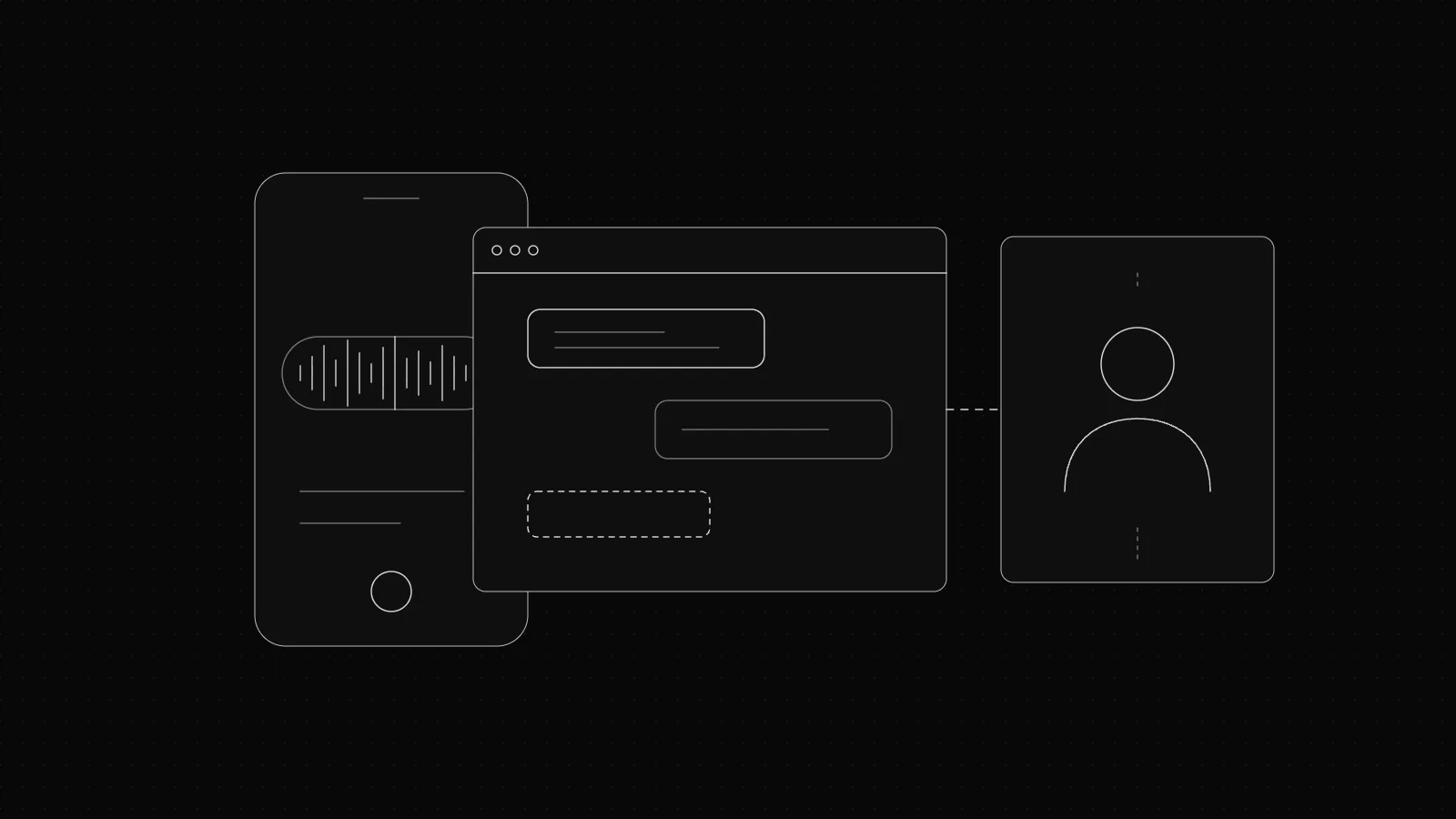
Voice is harder, and we'd rather say so plainly. Standard Arabic and spoken Gulf Arabic are different. Khaleeji phrasing, dialect words and street noise make transcription unreliable, so a voice receptionist needs dialect test data and a confidence threshold before it goes live. Below the threshold it confirms in text or routes to a person. A voice receptionist that sounds fluent and then gets a city or a price wrong is worse than one that never claims to be fluent
For Dubai, the practical answer is text-first in both languages now, with voice added only once you have an evaluation set from your real callers. A model that copes with one clinic or one brokerage in MSA can still misread how your customers talk. When you reach that stage, our guide to AI voice agents in the UAE covers the cost, the Arabic support and the limits
How much does an AI receptionist cost in Dubai?
The cost splits on the channel. A text-first intake-and-scheduling agent on WhatsApp costs from 5,000 AED, or 15,000–40,000 AED with CRM write-back and both languages, by our AI automation cost table. Model, API and hosting add from 700 AED / month, Meta bills WhatsApp template messages on top, and support is free for two months after launch, then a retainer. What each build includes is on AI automation services in Dubai
A telephony voice stack costs more, and the model isn't the expensive part. The extra money goes to telephony minutes, a voice provider and the streaming integration, the latency engineering that stops the caller hearing a two-second pause, and the audio test set in the dialect you take calls in. Call recordings also carry the same PDPL obligations as any other personal data you hold under Federal Decree-Law No. 45 of 2021, which our PDPL-compliant AI CRM guide walks through.
If most of your enquiries arrive as WhatsApp messages anyway, the text build answers them faster and costs a fraction. If your business depends on inbound phone calls in a specific dialect, the voice build is the real product and should be priced as one, with the test set in the quote
On the clinic booking agents, the reply to a new request went from 15 minutes on average to 2–3 seconds. Speed was the first win, but the agent only helps because it stays inside the services the clinic actually sells and passes real cases to an admin
Will customers know they are talking to AI?
They should, from the first line. A receptionist that opens with "Hi, I am the automated assistant for Al Amal Medical Centre, how can I help?" sets the right expectation. Meta also holds WhatsApp businesses to a quality standard, and pretending to be human is a fast way to damage yours (Meta: Business Messaging Policy). Disclosure also protects you legally, because a caller who thought they were talking to a person can dispute whatever the bot said.
Disclosure doesn't cost you leads. Dubai callers deal with automated phone trees and chatbots every day. What they punish is a bot that plays human and then has no answer, because by then they've lost both trust and time. Say it's AI, be useful in the first two messages, and hand off fast when it stops being useful. The handoff should feel like the conversation is getting better, not like the caller is being transferred
The takeaway
Scope before you buy. Automate intake, scheduling and FAQ answers from reviewed content; augment routing and tone detection; keep humans on complaints, prices, and anything medical, legal or visa-related. Run it text-first on WhatsApp in both languages before you pay for telephony voice, and disclose the AI in the first line. The build costs from 5,000 AED for a simple agent and 15,000–40,000 AED for a focused one when the handoff design is decided up front, and the cost grows with every row you push into automate before your staff and test data are ready
Tell us about the workflow and we'll take your real first-touch conversations, fill in the automate, augment and keep human table, and come back with a fixed-price estimate the same day
Questions people ask
What can an AI receptionist actually handle?
Intake (name, need, contact), scheduling into a real calendar, FAQ from your documented answers, and routing with context. Anything judgment-heavy — complaints, negotiation, medical or legal nuance — must hand off
Does an AI receptionist work in Arabic and English?
Yes on text channels; voice is harder. For Dubai reception, bilingual text via WhatsApp is proven — bilingual voice is viable but needs dialect testing before you commit
How much does an AI receptionist cost in Dubai?
A WhatsApp-first intake-and-scheduling agent starts from 5,000 AED, and a focused build with CRM write-back in Arabic and English costs 15,000–40,000 AED, plus model, API and hosting from 700 AED a month. A telephony voice stack adds telephony minutes and latency engineering
Will customers know they are talking to AI?
They should — disclose it in the first line. Systems that pretend to be human generate complaints and, under Meta policy for WhatsApp, risk quality-rating damage
Sources
- Meta: getting opt-indevelopers.facebook.com
- Federal Decree-Law No. 45 of 2021uaelegislation.gov.ae
- Meta: Business Messaging Policybusiness.whatsapp.com
 ChatGPT
 Gemini
 Claude
 Perplexity
 Google AI
 Grok