For a UAE SME deciding who builds their AI system, the honest answer is: freelancer for a bounded internal tool, agency for anything customer-facing or multi-system, in-house when AI is the product itself. The cost bands differ by an order of magnitude, but the failure modes differ more, and the failure modes are what actually decide
We are an agency, so read this with that bias in mind. We have also told prospects to hire a freelancer instead, and the cases where we are the wrong answer are listed below deliberately
What do the three options actually cost in Dubai?
| Option | Cost | What you are buying |
|---|---|---|
| Freelancer | AED 5,000–15,000 / week | One senior engineer's time |
| Agency | AED 60,000+ per build | A team, a process, delivery risk transfer |
| In-house hire | AED 25,000–45,000 / month + visa | Permanent capacity, slow ramp |
The freelancer band assumes a senior engineer who has shipped LLM systems; juniors charge less and cost more. In-house numbers exclude recruitment fee, visa, equipment, and the three months before the hire ships anything
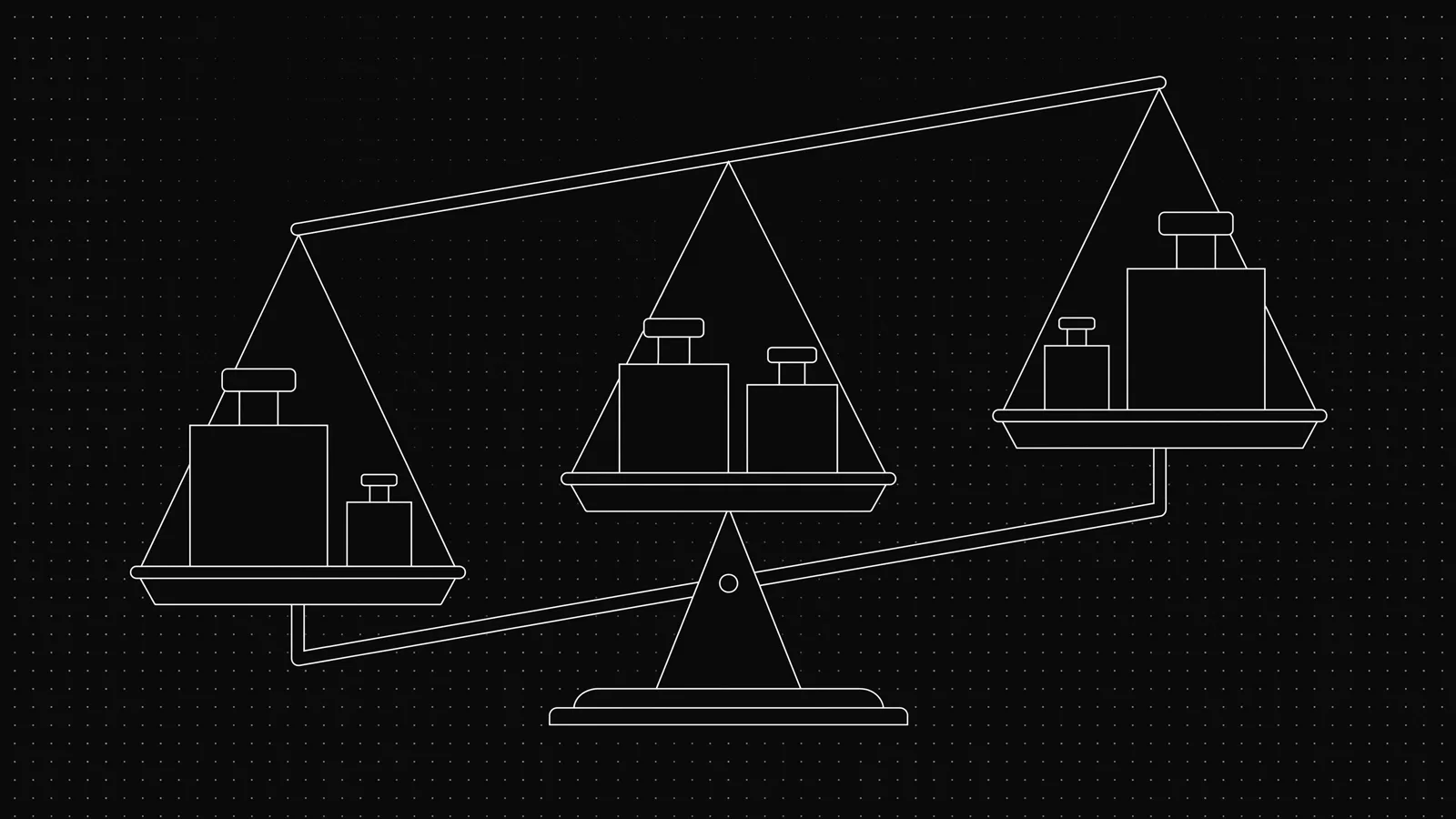
The bands overlap because seniority and scope matter more than the label
Where does each option fail?
Freelancer failure mode: single point of failure on everything — architecture, prompt quality, ops, documentation, and the bus factor. When they get sick, go on holiday, or take a bigger contract, your system freezes. The escape is a bounded spec plus an in-house technical person who reviews every pull request. If you have no one who can review code, you cannot manage a freelancer, and the project will drift quietly
Agency failure mode: sales-engineered scope and junior delivery. The proposal was written by someone senior; the build is done by whoever is free. Mitigation: ask who writes the code and demand to meet them — this is check 6 in the agency selection checklist. Also check whether they keep a bench of real production references or only demos
In-house failure mode: you hire before you know what to build. The first three months of an in-house AI hire are spent discovering the scope an agency POC would have answered in three weeks. For operational automation (not your core product), a salaried AI team is the most expensive way to learn
A freelancer is a single point of failure on everything: architecture, prompt quality, ops, documentation. When they get sick or take a bigger contract, your system freezes, and if you cannot review their code you cannot manage them at all.
When is each option genuinely right?
Freelancer wins when the spec is bounded, the system is internal, and you have a technical reviewer. Example: a script that reconciles two spreadsheets, a report generator, a scraper with a clear target. The cheaper option is correct because the blast radius is small
Agency wins when the system touches customers, money, or compliance, or when multiple systems must integrate reliably — WhatsApp + CRM + documents, with monitoring and someone to call when Meta changes an API at 2 a.m. This is also where a contract that assigns code, prompts and infrastructure to you matters; the checklist is in the same agency-selection article
In-house wins when AI is the product. If your startup's moat is the model or the pipeline, the people building it must be yours, and the cost of external knowledge walking out the door exceeds any agency fee
What should the contract cover regardless of who builds?
Four items, no exceptions: ownership of source code, prompts and evaluation sets; workflow definitions and data pipelines; infrastructure accounts (cloud, WhatsApp Business, API keys, domains) registered to your company not theirs; and a named maintenance arrangement with a response time after launch. A cheaper quote that skips these terms is not cheaper — it is rent disguised as a purchase. The money arithmetic for each path is in what AI automation costs and what an AI MVP costs
How do you actually vet a freelancer or agency?
For a freelancer, the vetting is the interview: ask them to walk through one production system they shipped end to end, alone. Not the demo — the failure they hit, the alert they got, the thing they had to fix at 2 a.m. A real shipper answers in specifics. A slide-deck shipper answers in features
For an agency, the vetting is the checklist, and it is short enough to quote: who writes the code (meet them), what you own at the end (code, prompts, pipelines, infra), what happens after launch (named maintenance), and whether they have shipped the pattern you need or only a demo of it. We went through the full seven-check version in how to choose an AI automation agency — the same checklist applies to a freelancer, just with one person on the other side of the table instead of a bench
What does the decision look like for a real scenario?
A Dubai service business wanting WhatsApp intake + CRM write-back: agency or a very senior freelancer with an explicit handover plan — customer-facing + multi-system + needs someone to call when Meta changes the API. A startup wanting a working demo to raise: senior freelancer or small agency — speed and cost beat process. An SME wanting a spreadsheet-reconciliation script: freelancer, no contest. A company whose product IS the AI system: hire in-house and treat outside help as a bounded boost, not the builder
What are the red flags regardless of the option?
Four universal tells, in order of how often we see them: a proposal with a single number and no stage breakdown (nobody honest can price an AI build in one figure); no mention of who owns the code, prompts and infrastructure (that omission is the business model); a demo that runs on mocked data instead of your documents; and no named maintenance arrangement. Any of the three options can produce all four — the option is not the risk, the contract and the review surface are
The takeaway
Bounded internal tool with a technical reviewer: freelancer. Customer-facing or multi-system work: agency. AI as the core product: hire in-house. Whatever you choose, get ownership of code, prompts, pipelines and infrastructure in writing — that clause decides whether leaving them is a handover or a rebuild
FAQ
Is an AI agency or freelancer cheaper in Dubai?
A freelancer costs less per week (AED 5,000–15,000) but one person owns every risk — architecture, ops, handover. An agency costs AED 60,000+ per build and absorbs delivery risk. For anything customer-facing, total risk-adjusted cost often favors the agency
When is a freelancer the right choice?
For a bounded internal tool with clear specs and your own technical person to review the code. Freelancers fail on open-ended projects with no in-house reviewer
When should we hire in-house instead?
When AI is the product, not a support function — if the system IS your business, own the team building it. For operational automation, hiring AED 40,000+/month of salary before validating the scope wastes money
What should the contract cover regardless of who builds?
Ownership of code, prompts, workflow definitions and data pipelines; infrastructure accounts registered to your company; and a named maintenance arrangement after launch