
SEO gets your pages crawled, indexed and ranked in Google's results. AEO shapes those pages so a search engine or voice assistant can lift one direct answer from them. GEO makes the same content easy for ChatGPT, Perplexity, Gemini and AI Overviews to quote and cite. All three share one foundation, and most of their tactics overlap
The question usually reaches us from a founder in Dubai who has just been pitched a "GEO package" priced like a new discipline. The three acronyms describe real differences in where your content appears and how it gets credited. They do not describe three separate jobs, and a vendor who sells them as separate jobs is selling you the same work three times
What is SEO, and is it still the base layer?
SEO is the practice of making pages crawlable, indexable and worth ranking in a classic results page. It is still the base layer, because every AI surface we know of retrieves from an index first and writes second
Google says this plainly. Its AI features documentation states that to be shown as a supporting link in AI Overviews or AI Mode, a page "must be indexed and eligible to be shown in Google Search with a snippet", and that "there are no additional technical requirements." The same page lists the usual fundamentals as the way in: crawling allowed in robots.txt and by your CDN, internal links, text content, and structured data that matches the visible page.
Perplexity and ChatGPT search run their own retrieval, but the mechanics rhyme. The 2023 paper that named GEO, Aggarwal et al., arXiv:2311.09735, built its test engine by fetching the top 5 Google results for each query and having an LLM write an answer from them. A page outside that first retrieval step never gets a chance to be cited, however well its paragraphs are written.
What is AEO?
AEO (answer engine optimization) is writing and marking up content so a system can return one answer without the user clicking through. The target surfaces are featured snippets, People Also Ask boxes, voice assistants and knowledge panels
The tactics are concrete. You phrase headings the way people phrase questions, answer in the first one to three sentences under each heading, keep that answer self-contained, and add structured data from schema.org (FAQPage, Organization, BreadcrumbList) that matches what a reader sees. Google's structured data policies require that match, and markup that describes content not on the page can lose rich-result eligibility.
AEO predates large language models. Featured snippets were around years before generative search, and the editorial habit behind them (answer first, explain second) is older than search
What is GEO?
GEO (generative engine optimization) is the practice of making content more likely to be quoted and cited inside an answer that a language model writes. The surfaces are ChatGPT search, Perplexity, Gemini, Google AI Overviews and AI Mode
The term comes from the paper cited above. The authors tested nine rewrite methods on a benchmark of 10,000 queries (GEO-bench) and measured how much of the generated answer was attributed to each source. Their headline result: adding citations to credible sources, adding quotations, and adding statistics raised visibility by roughly 30 to 40 percent on their position-adjusted word-count metric. Keyword stuffing, the classic SEO trick, performed poorly. On Perplexity itself, quotation addition gave a 22 percent improvement
One table in that paper gets less attention than it deserves. When the authors split results by the source's original Google rank, the "Cite Sources" rewrite lifted the fifth-ranked source by 115.1 percent and cut the first-ranked source by 30.3 percent. GEO tactics move share between pages that were already retrieved, redistributing citations among the top results. A page outside that set gains nothing from them
The paper is also two years old, tested on engines that have changed since, and measured visibility inside answers rather than clicks or revenue. We treat it as evidence about direction, and we would not quote its percentages to a client as a forecast
How do SEO, AEO and GEO compare side by side?
The table below is the one we use in audits. The last two columns matter most, because they show how little of GEO is new work
| SEO | AEO | GEO | |
|---|---|---|---|
| What it optimizes | Rank position for a query | Selection as the single extracted answer | Share of a generated answer attributed to your page |
| Main surface | Classic results page (10 blue links) | Featured snippet, People Also Ask, voice, knowledge panel | Citations in ChatGPT, Perplexity, Gemini, AI Overviews, AI Mode |
| How success shows up | Impressions, clicks, position in Search Console | Snippet ownership, zero-click impressions | Your domain named or linked in answers to a fixed prompt set |
| Core tactics | Crawlability, indexing, internal links, page speed, backlinks, intent match | Question-shaped headings, 40 to 60 word direct answers, FAQ and Organization schema | Statistics, quotations, cited primary sources, self-contained passages, consistent entity naming |
| What it shares with the others | The index every other layer reads from | Answer-first structure GEO also rewards; schema that clarifies entities | Depends on SEO retrieval and on AEO structure |
| What it does not change | Whether an AI quotes you once you are retrieved | Your rank, or whether you are crawled at all | Your index eligibility; Google says no special markup or files are needed |
| Typical failure | Ranks, but the answer lives three screens down the page | Wins snippets for questions nobody with budget asks | Paying for "AI optimization" on a site Google has not indexed |
If you read only one row, read "What it does not change". Each layer has a ceiling set by the layer beneath it
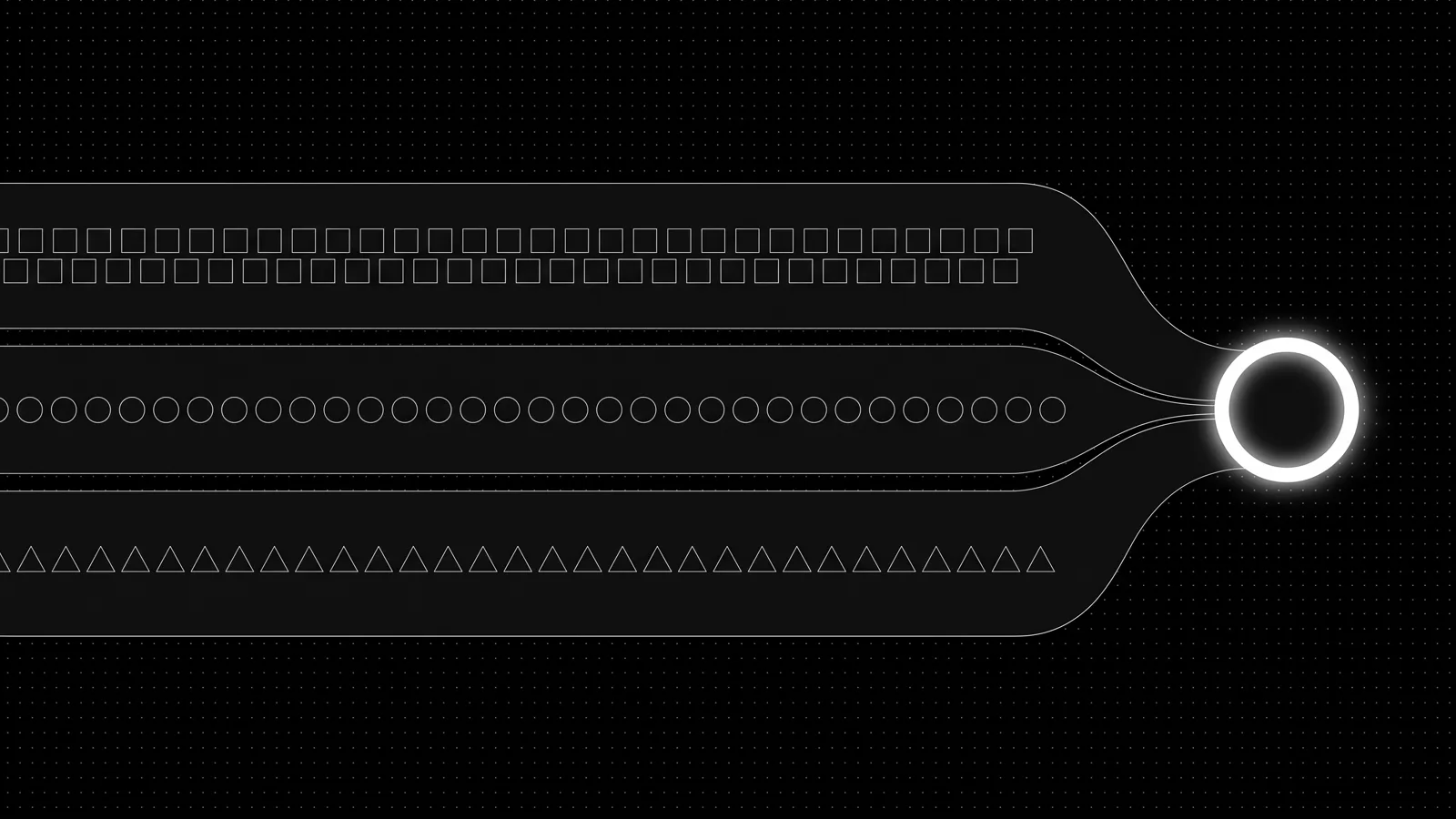
What overlaps and what doesn't?
Most tactics overlap completely. An answer-first paragraph with a number and a named source wins a featured snippet, gets extracted by Perplexity, and reads better for a human, all from one edit. We count a single change three times in our audits only when we want to explain it, never when we price it
We see real differences in four places:
- Measurement. SEO and AEO show up in Search Console. Google counts AI Overviews and AI Mode traffic inside the normal Web search type, so you cannot isolate it there. ChatGPT and Perplexity give you no console at all. GEO work needs its own measurement, which in practice means running the same list of prompts across engines every month and logging which domains get cited
- Unit of competition. SEO competes for a page slot. GEO competes for sentences inside one answer, which is why the GEO paper's best tactics all add citable material (a number, a quote, a source) rather than keywords
- Entity consistency. A generative engine stitches facts from several sources into one paragraph. If your company name, address and services read differently on your site, your Google Business Profile and three directory listings, the model has to pick one or skip you. SEO tolerated that mess better
- Crawler policy. Your robots.txt now has to make deliberate choices about GPTBot, PerplexityBot and Google-Extended, not only Googlebot. Google notes that Google-Extended controls training and grounding in some of its other systems, while Search's AI features follow Googlebot rules
What stays the same is longer: indexing, page speed, internal links, helpful content, accurate structured data, and earning references from sites that matter in your market. The GEO label adds no exemption from any of them
Is GEO just SEO with a new name?
Mostly, yes. The tactics with the best evidence behind them (cite primary sources, use real statistics, write self-contained passages) are what good editors and good SEO writers already did. What GEO adds is a different measurement problem and more weight on quotable sentences and entity consistency
We say this because the alternative pitch is common in the UAE market: a separate AED retainer for "GEO", run by a different team, producing content the SEO team never sees. That split creates the entity drift described above. One team owning one content architecture, with three sets of metrics, costs less and works better
Most of what we price as GEO is the content structure we already ship for SEO; we do not bill it as a new discipline, and we have never seen a separate GEO retainer do work a single content plan did not.
Some things nobody can promise. No vendor controls whether ChatGPT cites a page on a given day. Answers vary between runs, between users and between engine versions. We publish methods and measured results, and we do not promise inclusion. Google's own documentation notes that AI Overviews often don't trigger at all, because Google only shows them when its systems judge them additive to classic results
What should a UAE business actually do?
Start from the bottom of the stack and work up, because a fix at the AEO or GEO layer does nothing for a page the index never picked up
This is the order we run for clients:
- Confirm indexing. Check Search Console coverage for your money pages, and confirm robots.txt and your CDN (Cloudflare's bot settings catch people out) let Googlebot, Bingbot and the AI crawlers you want
- Fix entity consistency. Use one company name, one address format and one service list across your site, Google Business Profile, LinkedIn and every directory. For a brokerage, that includes your Property Finder, Bayut and Dubizzle agency profiles and the RERA-registered name
- Rewrite the top 10 pages answer-first. Each H2 is a buyer question; the first 40 to 60 words answer it alone. Add Organization and FAQPage JSON-LD that matches the visible text
- Add citable material. Real numbers in AED, timelines in weeks, named regulations with links to the source on uaelegislation.gov.ae. A sentence that names the document, the authority and the timeline in weeks is quotable; "we make renting easy" never will be.
- Measure with a fixed prompt set. Write 20 to 40 questions your buyers ask, in English and Arabic, run them monthly across ChatGPT, Perplexity, Gemini and Google, and log every cited domain. The method is laid out in how to get cited by ChatGPT and Perplexity
Bilingual matters more here than in most markets. A buyer in Abu Dhabi may ask in Arabic, read the answer in English, and call in either. If your Arabic pages carry a different company name or older prices, the engine sees two businesses
For real estate specifically, the questions that get asked are operational: how off-plan payment plans work, what an SPA covers, how long a NOC takes. Those are the same questions your agents answer on WhatsApp every day, and turning those answers into pages is usually the fastest content win we find. Our post on handling Property Finder and Bayut leads over WhatsApp covers the inbound side of that loop
What did this look like on a real project?
On Trusted Real Estate, a Dubai real estate site, we built a site chatbot that pre-qualifies buyers and generates PDF contracts. SEO traffic rose 21 percent and lead-to-call time dropped 17 percent. We did not split that work into SEO, AEO and GEO workstreams; one content structure served all three, and the measurable result arrived through classic search first
That project predates our fixed-prompt citation tracking, so we have no AI-citation numbers to quote for it, and we won't invent them. New audits include a citation baseline from day one, which is how the AI search visibility service is scoped. If you are comparing vendors for this kind of work, our checklist for choosing an AI agency in Dubai lists the questions that separate methods from promises
The takeaway
SEO decides whether you are in the index, AEO decides whether one answer can be lifted from your page, and GEO decides how much of a generated answer credits you. Each depends on the layer beneath it. Fix indexing and entity consistency first, write answer-first with real numbers and primary sources, then measure citations with a fixed prompt set. Any vendor pricing GEO as separate work from the other two is charging you twice for one content architecture
If you want to know which layer your site is failing at, book a free audit and we will run your top buyer questions across the engines and show you the cited domains
FAQ
What is generative engine optimization?
GEO is the practice of making content citable by generative engines such as ChatGPT, Perplexity, Gemini and AI Overviews, using self-contained passages, statistics, and source citations
What makes a website eligible for Google AI Overviews?
Normal indexing plus helpful, well-structured content. Google states no special markup or files are required and inclusion is never guaranteed
How do I write content that AI assistants can cite?
Lead each section with a direct answer, keep paragraphs self-contained, include named entities and numbers, and cite primary sources engines can verify
Does traditional SEO still matter?
Yes. Crawlability, indexing and authority remain the entry requirement. AEO and GEO are layers on top of SEO and do not replace it
What is the difference between AEO and GEO?
AEO targets direct-answer surfaces like featured snippets and voice. GEO targets generative citations. The tactics overlap, and answer-first structure serves both
Sources
- AI features documentationdevelopers.google.com
- Aggarwal et al., arXiv:2311.09735arxiv.org
- schema.orgschema.org
- structured data policiesdevelopers.google.com
- uaelegislation.gov.aeuaelegislation.gov.ae