
Does WhatsApp automation work for a UAE business? Yes, when the bot handles the repetitive questions and hands the rest to a person. WhatsApp is where customers already message businesses in most of the world. It's also where most automation projects fail, usually because the bot tries to do too much, not because the API is hard.
Why do most WhatsApp bots fail?
Most WhatsApp automation projects follow the same arc. A team builds a bot that handles common questions, deploys it, and watches it work for a week. Then someone sends a message the bot wasn't trained for. The bot makes up a reply, the user gets frustrated, and the team adds a rule. Two months later, the bot is a long list of special cases and the team is handling more conversations by hand than before.
The root cause is treating the bot as a replacement for a person. A bot works better as a filter.
The filter pattern
The split between bot and person looks like this:
| Message type | Bot or human |
|---|---|
| Pricing, hours, status, simple FAQs | Bot, instantly |
| Repeated escalation pattern (for example refund status) | Bot, once it becomes a new automated flow |
| Anything the bot wasn't built for | Human, with a context packet |
| Judgment calls and unhappy customers | Human |
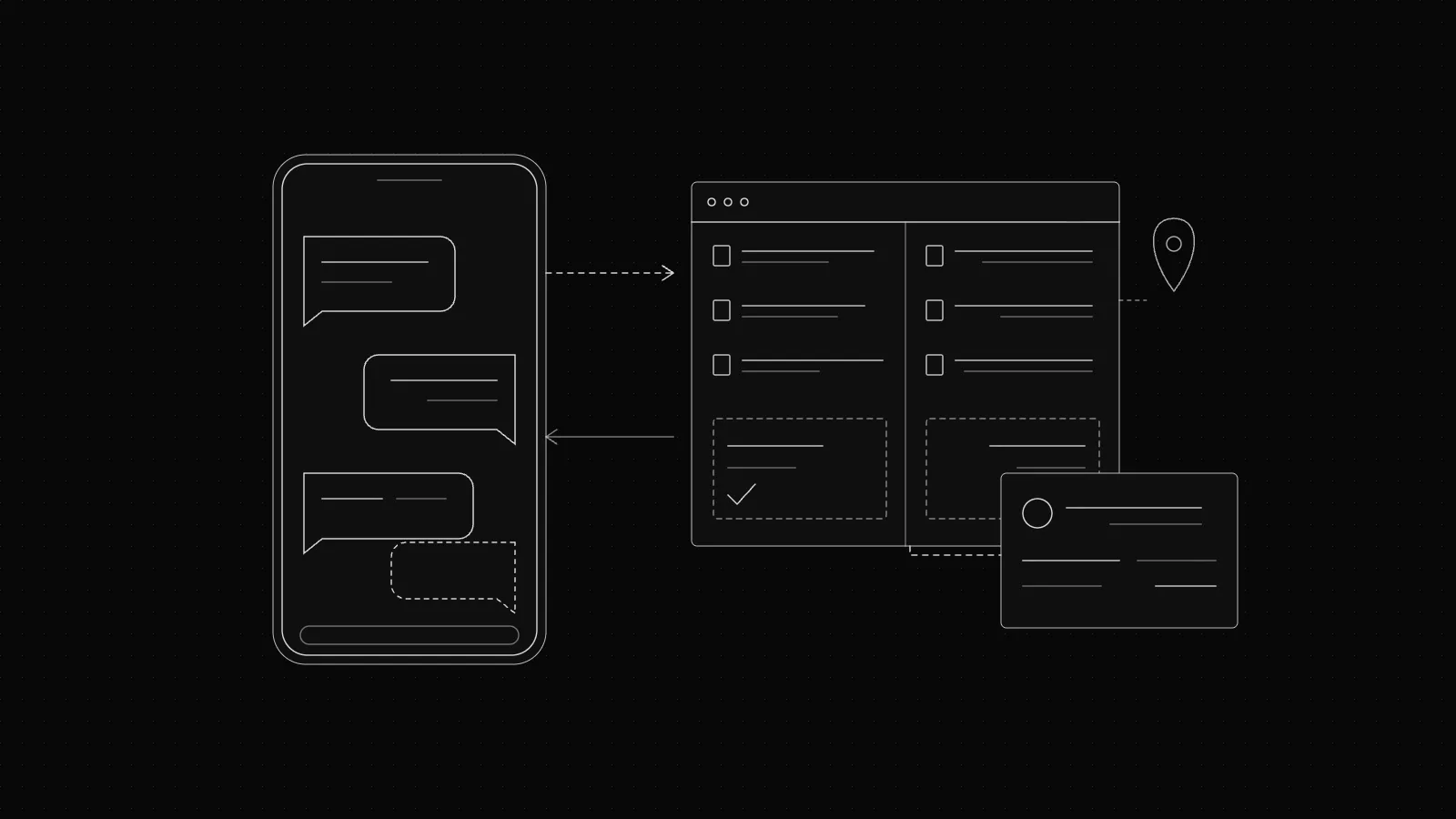
A good WhatsApp system does three things:
- It responds instantly to what it can handle: pricing, hours, status, simple FAQs. The bot answers in under a second, 24/7.
- It hands off cleanly to a person when it can't. Instead of "I'm sorry, I don't understand", the person gets a structured handoff with full context: what the user asked, what the bot tried, and why it's escalating.
- It learns from the handoff. Every escalation is logged, and patterns show up. If 30% of escalations are about refund status, that becomes a new automated flow.
The metric that matters is how fast the customer gets a first useful reply, more than the share the AI handles. If the bot handles 40% of messages instantly and hands off the rest with context in under 30 seconds, the customer is better served than by a human-only team that takes 4 hours to reply. There is a platform reason to keep the bot narrow too. Users can block or report businesses, and Meta may limit a business's message volume based on that feedback (WhatsApp Business Messaging Policy).
The goal is not to replace the human. I build bots to filter the repetitive 60 percent and hand off the rest with context, because a bot that tries to handle everything turns into a fragile pile of exceptions within two months.
How should a WhatsApp bot hand off to a human?
The handoff is the hardest part. When the bot escalates, the agent should see:
- The full conversation history
- What the user originally asked
- What the bot classified it as
- Why the bot decided to escalate
- Any relevant context (order numbers, account info, previous interactions)
To make that possible, the bot has to keep track of the conversation state instead of answering message by message. Every message updates the state, and the state decides whether the bot can continue or must hand off. Our guide to WhatsApp bot human handoff covers when the bot must escalate.
What we built
For clients, we build this pattern as a custom WhatsApp layer that:
- Classifies inbound messages in real time
- Responds to queries it can handle with pre-approved templates and LLM-generated replies. Outside the 24-hour customer service window, only pre-approved templates can be sent, and only to people who opted in (Meta: sending messages). WhatsApp Business API cost in the UAE explains what those templates cost and how setup works
- Escalates to humans with a structured context packet
- Logs every interaction for audit and improvement
Response time drops from hours to seconds for most messages, and agents spend their time on conversations that need a person instead of answering "what are your hours" for the 50th time. If you're budgeting for a build like this, WhatsApp chatbot cost in the UAE breaks down the build and monthly fees.
The takeaway
Don't try to automate 100% of conversations. Automate the 60% that are repetitive, hand off the 40% that need judgment, and make the handoff invisible to the user.
Questions people ask
Will WhatsApp automation get my business number banned?
The official Business Platform with opt-in and approved templates carries far lower risk. Bans follow unofficial bots that automate the personal app, which violates Meta policy
When should a WhatsApp bot hand off to a human?
When confidence drops, when the user asks for a person, or when the request needs judgment: pricing negotiation, exceptions, complaints. The human should receive the full thread and the reason for escalation
How fast should WhatsApp automation reply?
Instantly for handled queries. The useful metric is response time to first useful reply: instant for the share the bot covers, under a minute for escalations with context, without the user repeating themselves
Does WhatsApp automation need the official API?
For anything beyond a personal account, yes. The official Business Platform provides templates, opt-in rules and policy protection; unofficial layers risk the number itself
Sources
- WhatsApp Business Messaging Policywhatsappbusiness.com
- Meta: sending messagesdevelopers.facebook.com
 ChatGPT
 Gemini
 Claude
 Perplexity
 Google AI
 Grok
Grok